


The problems at the intersection of media, online harm, technology, and accountability don't respect disciplinary boundaries. Neither should the people working on them.
A journalist investigating an extremist network needs to understand platform infrastructure. A human rights lawyer building a case around digital evidence needs to understand how that evidence was collected and verified. A technologist building tools for open-source investigation needs to understand what practitioners in conflict zones can actually access and use. A researcher documenting online abuse needs to understand how newsrooms make editorial decisions, and what gets lost in translation between the field and the published piece. And a community documentarian on the ground needs to understand how her work will travel once it leaves her hands: who will interpret it, in what context, and toward what end.
These people rarely work together in any sustained way. The communities of practice1 that exist are largely siloed: by discipline, by geography and language, by institution, and by the structural imbalances that have long shaped who gets to lead, contribute, and be heard in this space.
The Field exists to change that.
What The Field is
The Field is a cross-sector community of practice (CoP)2, global from the start, for journalists, researchers, advocates, lawyers, and technical practitioners working at the intersection of media, harm, technology, and accountability.
It was founded on a simple argument: that the existing community of practice in this space is fractured, skewed toward Global North institutions, and structurally extractive toward the practitioners with the most situational knowledge and the least institutional power. That better outcomes— better journalism, stronger accountability, more effective tools, more durable practice require deliberate, unblocked collaboration across the full spectrum of the field.3
This is not a network. It’s a working community co-created, contribution-led, and designed to be less monopolized, more inclusive, and genuinely global.
What The Field does
The Field brings together practitioners to:
Build shared knowledge across disciplines, geographies, and languages so that the journalist, the lawyer, the researcher, and the technologist are working from the same foundation rather than talking past each other.
Develop practical frameworks and field guidance including methodologies, tools, and resources that are actually usable by the full range of people doing this work, not just those with institutional backing and Global North infrastructure.
Strengthen the work that holds systems accountable by centering practitioners with situational knowledge, reducing extractive dynamics, and creating conditions for collaboration that is fair, equitable, and genuinely useful.
Build a community of practice that lasts by connecting practitioners across sectors and geographies who are doing this work, sharing what they know, and building something more durable than any single investigation, report, or news cycle.
Who it’s for
If you work in any of the following, wherever you are in the world, The Field is for you:
Journalism and editorial practice · Open-source investigation and digital evidence · Human rights documentation and advocacy · International law and accountability · Disinformation and information disorder research · Platform policy and tech accountability · AI, emerging technology, and public interest practice · Media training and capacity building
This includes, and deliberately centers, practitioners from the so-called Global South (Global Majority), diaspora communities, and those working in and on conflict-affected and underrepresented contexts. The people closest to the harm are the ones this field most needs to hear from.
You don’t need an institutional affiliation. You don’t need to be based in a Global North city. You need to be doing the work, or building toward it.
Further Reading
The Field builds on arguments first made here: The Case To (Re)new Community of Practice for the Open Source Investigative Field — Symposium on Fairness, Equality, and Diversity in Open Source Investigations, OpinioJuris.
How to join
The Field is in its founding phase. This is the moment to get in early, shape what it becomes, and connect with the first cohort of practitioners building it together.
To join or express interest:
Fill in the intake form here
Reach out directly: inquiries@rajaalthaibani.com ; Or leave a comment below.
Tell us who you are, what you work on, where you’re based, and what you think The Field needs to do. That information will directly shape how the community is built.
There is no membership fee. No institutional gatekeeping. No prerequisite except the work.
The Field was founded by Raja Althaibani. Read her work at Unembedded.
About the Author
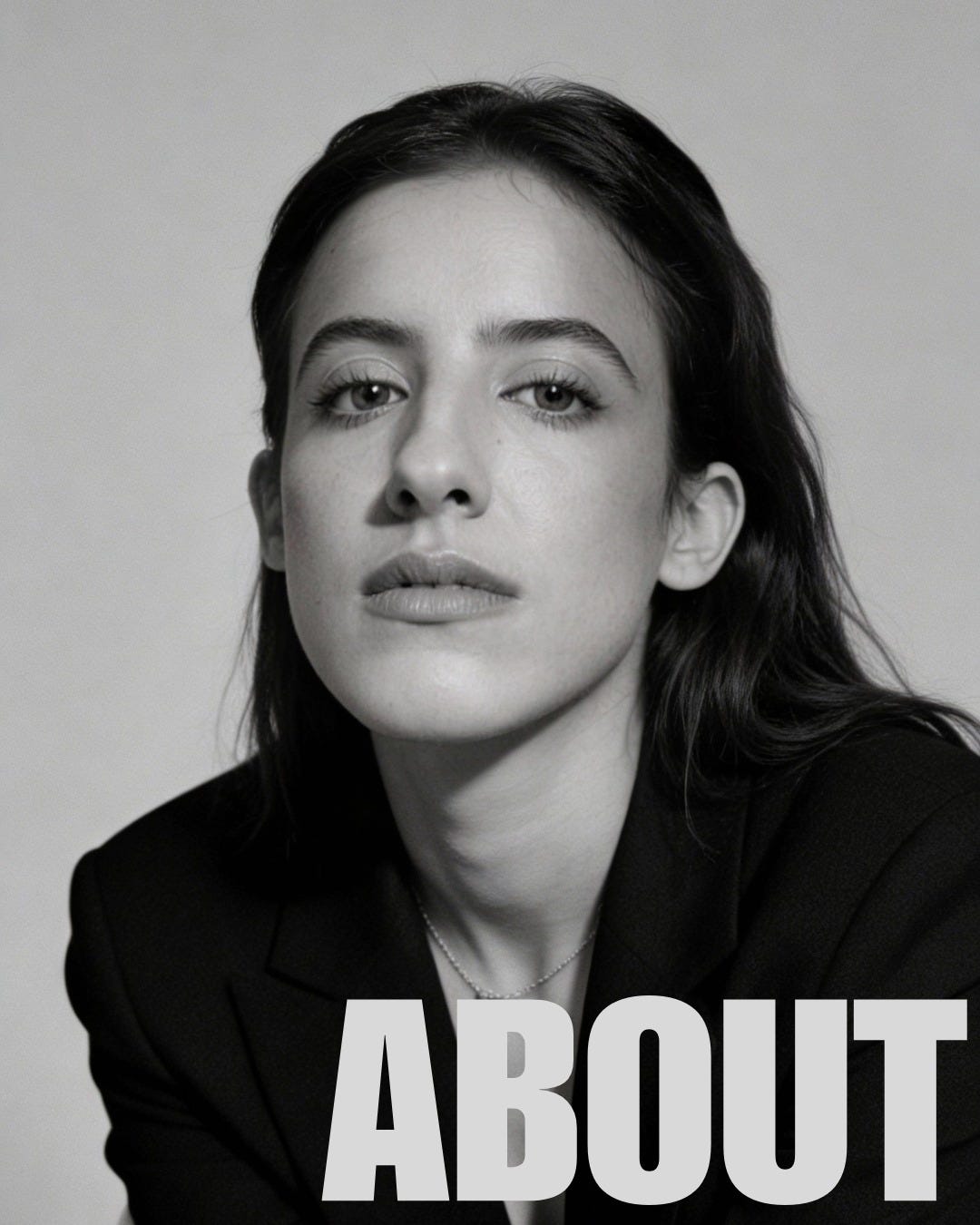
Raja Althaibani works at the intersection of media, harm, technology, and accountability— advising, training, writing, investigating, and building the infrastructure that helps practitioners and institutions respond to an information landscape that moves faster than most frameworks can follow.
Her background spans human rights, journalism, international law and accountability, and open-source digital documentation. She works with journalists, editors, researchers, lawyers, advocates, technologists, and institutions across sectors and geographies, advising on online harm, information disorder, and emerging technology; training practitioners to work with greater rigor and judgment; and building cross-sector communities and tools designed to make the field stronger, more inclusive, and less extractive.
Her work is defined by one consistent thread: closing the gap between complex systems and the people who need to understand, navigate, and hold them accountable.
She writes Unembedded—long-form analysis, reported essays, practical guides, and field frameworks on media, power, harm, and who controls the story. It publishes original reporting, case studies, curated resources, tools and templates for practitioners, and research and reading lists across the beats it covers.
Unembedded includes two ongoing series: The Safari Is Over—on how media covers harm, extremism, and algorithmic culture, and what better practice looks like— and The Field Dispatch, the working intelligence arm of The Field community of practice. She is the founder of The Field.
Work with Raja: inquiries@rajaalthaibani.com or via contact form; and website www.rajaalthaibani.com

“Community of practice” refers to a group of people who share a craft or profession and deepen their knowledge and expertise by interacting on an ongoing basis. The concept was developed by Etienne Wenger and Jean Lave. The Field extends this definition: an interdisciplinary, cross-sector community explicitly designed to challenge the status quo, disrupt extractive dynamics, and advance collective practice—including the tools, technologies, and institutional architectures that shape how this work gets done and who gets to do it.
The CORAL Network (Red CORAL) is a Latin American community of practice bringing together land defenders, indigenous communities, and open-source practitioners. redcoral.la
This argument is developed in full in: Raja Althaibani, Libby McAvoy, and Dalila Mujagic, The Case To (Re)new Community of Practice for the Open Source Investigative Field, OpinioJuris, February 2023.