


NEW YORK — When New York Mayor Zohran Mamdani dropped a two-minute video address calling Israeli Prime Minister Benjamin Netanyahu a war criminal and the architect of a genocide, he didn’t just create a viral moment. He signaled a significant shift in the U.S. political landscape, and in how American officials can publicly approach Palestinian rights and accountability.
With more than 30 million views, the address reflected something larger: the erosion of what many have called the Palestinian exception in American politics, the longstanding assumption that criticizing Israel was politically fatal. Increasingly, elected officials are demonstrating that speaking plainly about Palestinian rights can be politically survivable, and potentially advantageous.
Foreign policy is increasingly being understood as a domestic reality inextricably linked to our own communities. Leaders are proving that you can treat Palestinian life as a matter of universal right, say it plainly, and win.
The debate has moved beyond whether Palestinians deserve equal humanity. The challenge now is confronting the political, financial, and institutional systems that have enabled decades of impunity.
As those systems come under greater scrutiny, statements and policies once treated as politically disqualifying have increasingly moved into the open, including explicit calls for displacement and collective punishment.
At the same time, decades of U.S. political, financial and lobbying infrastructure continue to impose substantial costs on officials who challenge longstanding U.S. policy toward Israel.
That is why Mamdani’s clarity matters. He is helping shift the political baseline, but in this video address, he stopped short of maximizing the opportunity.
Mamdani’s intervention exposes two different problems. The first is jurisdictional: the institution he invokes offers New York almost no practical leverage. The second is narrative: concentrating accountability on Netanyahu risks mistaking the most visible actor for the system that produced him.
In his address, Mamdani stated the legal truth: Netanyahu belongs in a courtroom, not a motorcade. He acknowledged that New York has no independent authority to execute International Criminal Court (ICC) warrants, and argued that the federal government should step in, join the Rome Statute, and enforce the arrest.
He named the limits of his office, but treating those limits as a mere technicality misses the entire architecture of U.S. foreign policy . The United States is not a neutral bystander waiting to join the court. It has spent decades actively engineering a legal fortress to ensure it never has to answer it.
In 2002, Congress passed the American Servicemembers’ Protection Act, contemptuously nicknamed the Hague Invasion Act, which explicitly authorizes the U.S. president to use “all means necessary,” including military force, to liberate any U.S. or allied official detained by the court. The law reflects how aggressively Washington has sought to insulate U.S. personnel and certain allies from the court, making the prospect of the federal government voluntarily executing an ICC warrant politically remote.
That reality was reinforced just twenty-four hours before Mamdani’s video address, when the President declared that Netanyahu “will not be arrested” on U.S. soil.
Demanding that Washington suddenly enforce an ICC warrant is therefore appealing to the one government whose domestic laws were deliberately designed to resist the court’s authority. Nor is doing so necessarily in the United States’ long-term interest, given that successive U.S. administrations have themselves been accused of conduct that could face international legal scrutiny if the same standards were consistently applied.
Even if the United States ratified the Rome Statute tomorrow, history suggests that treaty membership alone is no guarantee of enforcement. The past two years have exposed an uncomfortable reality: many ICC member states have treated their legal obligations as optional rather than binding.
While countries including Ireland and the Netherlands initially pledged to enforce the warrants “100 percent,” events quickly exposed the gap between legal commitments and political will.
In April 2025, Netanyahu landed in Budapest to a literal red carpet. France pledged to “vigorously apply” the warrant on a Tuesday, only to pivot by Wednesday to claim Netanyahu enjoyed head-of-state immunity. This is the same France that publicly lectured Mongolia months earlier for extending that exact same courtesy to Vladimir Putin, who strolled through an ICC member state in 2024 completely unbothered. Germany “examined the legalities”. Italy declared an arrest “unfeasible.” And the United Kingdom chose its words like an operative defusing a bomb.
This fracture deserves a precise name: the court for thee, immunity for me and mine.
The reality is the ICC has no police force and it cannot prosecute defendants in absentia. Its authority depends almost entirely on member states choosing to execute its warrants. When those governments refuse, accountability shifts away from The Hague and toward jurisdictions that possess both legal authority and the political willingness to act.
But none of this should be read as diminishing Mamdani’s broader record. His proposed Not on Our Dime Act recognized a central strategic reality: meaningful accountability often begins by targeting the financial and institutional infrastructure that enables unlawful conduct.
By seeking to prohibit New York–registered charities from funding Israeli settlements, the legislation focused on a lever that actually falls within New York’s jurisdiction. That makes the omission in this particular speech all the more notable, not because the strategy is absent from his politics, but because it was absent from one of his most widely watched public interventions.
Which raises the obvious question: if not The Hague, then where?
This brings us to the opening Mamdani missed, and what many experts, advocates, and activists, like Mohammed El-Kurd, pointed out immediately after the video went viral. The real lever isn’t sitting in a courtroom in the Netherlands. It is bolted directly to the floor of New York City.
New York is not only the world’s financial capital. It is also home to dozens of tax-exempt organizations that raise and transfer tens of millions of U.S. dollars to support Israeli settlements in the occupied West Bank. Those organizations are incorporated under New York law, regulated by New York authorities, and fall within the jurisdiction of the New York State Attorney General.
The distinction is jurisdiction. Washington has spent decades resisting the ICC; New York already has authority over organizations incorporated and operating under its laws. That is where rhetoric encounters an actual lever.
The second opportunity Mamdani left on the table is more subtle, but ultimately more consequential.
Mamdani’s argument was rooted in universality, not exception. He framed his remarks around the principle that international law should apply equally to everyone, repeatedly arguing that any individual subject to an ICC arrest warrant should be held accountable regardless of nationality or political office. That consistency has been a defining feature of his public advocacy and is one of the speech’s greatest strengths. Yet, in practice, Netanyahu remained its unmistakable focal point.
That is understandable. Netanyahu is the country’s longest-serving prime minister and the most recognizable face of the war.
But centering the critique on Benjamin Netanyahu risks reinforcing one of the most effective enduring narratives in modern political communication: reducing systems to a single villain.
There is comfort in believing that history turns on one person. It suggests that if the individual is removed, the crisis ends with them. But states do not function that way. Policies are conceived, refined, funded, defended, and carried forward by institutions that survive elections and outlast the politicians who temporarily lead them.
That is precisely why so much of Israel’s political and public relations machinery benefits from making Netanyahu the face of everything. If the world’s attention remains fixed on one man, it becomes easier to overlook the broader architecture that produced, legitimized, and sustained these policies across successive governments.
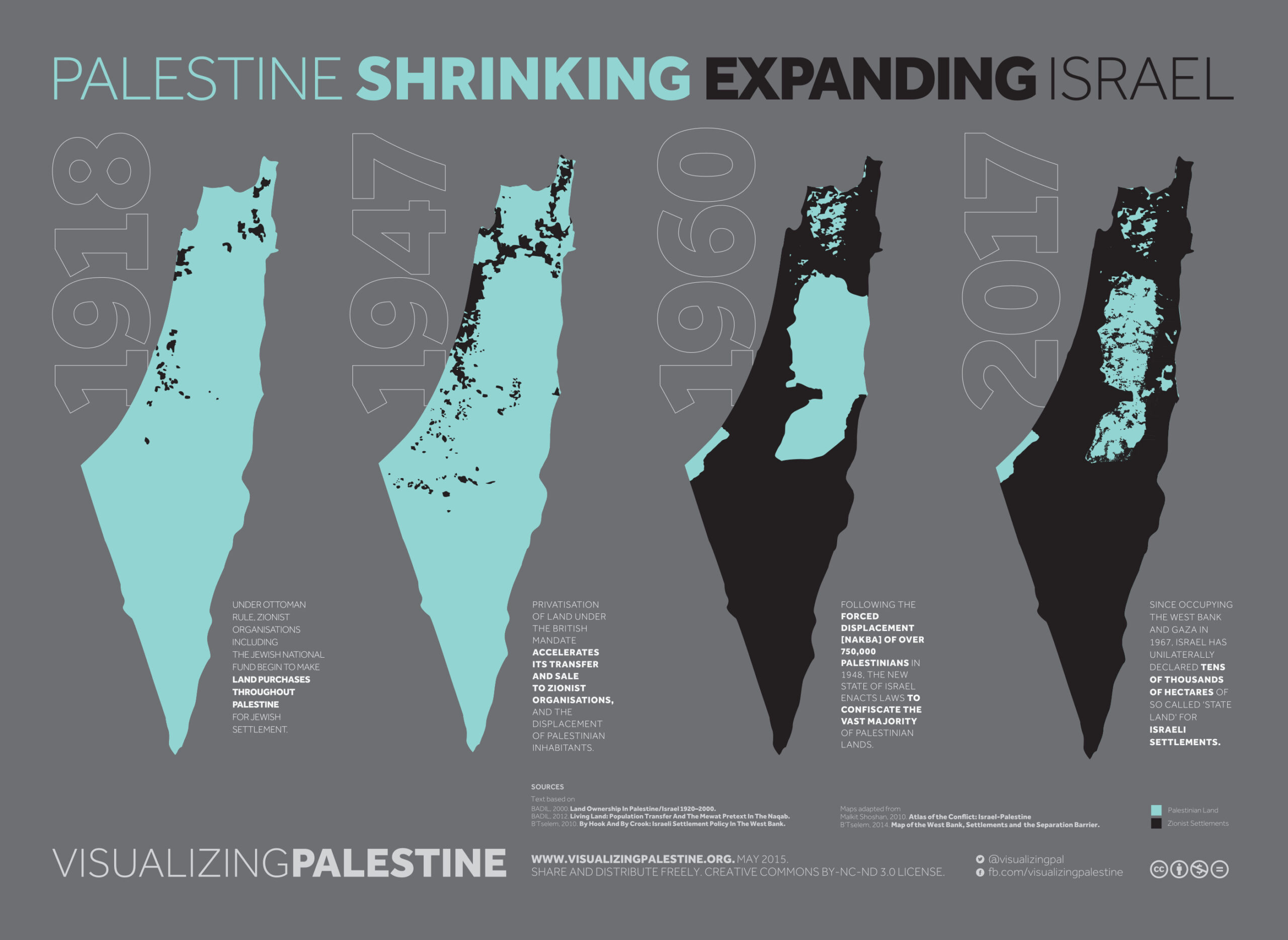
But historical record makes that difficult to defend. The displacement of Palestinians, settlement expansion, territorial fragmentation, and the systematic denial of Palestinian self-determination did not begin with Netanyahu, nor are they likely to end with his departure. These are the product of decades of legislation, military policy, court decisions, bureaucratic practice, and political consensus. And we have decades of evidence proving this.
None of this absolves Netanyahu. He bears responsibility for decisions made under his leadership and for the coalition he assembled, in which figures such as Bezalel Smotrich and Itamar Ben-Gvir have exercised extraordinary influence. But that coalition is better understood as the latest expression of a much longer trajectory than as a sharp break from it.
That is the distinction worth preserving. Holding individuals accountable is essential but mistaking the individual for the system is not.
The coalition itself illustrates the point.
Israel operates without a single written constitution, relying instead on Basic Laws that have become increasingly vulnerable to political manipulation. Netanyahu governs through a coalition in which far-right partners exercise enormous leverage over both government policy and the state’s future direction.
Smotrich, as Finance Minister, controls both the national purse strings and the settlement portfolio. He has openly advocated annexing the West Bank under a doctrine of “maximum land, minimum Arab population,” while his ministry has prepared plans for future settlements in Gaza. Ben-Gvir, as National Security Minister, oversees the national police, has championed expanding arms to radical settlers, and repeatedly promotes what he calls the “voluntary migration” of Palestinians. Both have made clear that they are willing to collapse the government if military operations are significantly curtailed and their military aggression is challenged.
The clearest evidence, however, lies not only in campaign speeches but in legislation.
Recent laws and legislative proposals demonstrate how political rhetoric becomes state policy. Consider the proposed Death Penalty for Terrorists Law. The bill establishes an expedited system of capital punishment for offenses defined through broad nationalist language. The significance extends beyond the death penalty itself. The proposal would further embed unequal treatment of Palestinians into the machinery of criminal law, creating an exceptional punishment regime widely expected to fall disproportionately on Palestinians.
What might otherwise be dismissed as extremist rhetoric is being codified into legislation, giving discriminatory state power the legitimacy and permanence of law. The danger is not only what the law permits, but what its passage would reveal: policies once associated with Israel’s far right can migrate into the legal architecture of the state itself.
And that shift is not confined to political elites. It is increasingly reflected in public opinion.
A March 2025 poll of Israeli Jews published in Haaretz revealed that 82 percent favored the total expulsion of Palestinians from Gaza, and 47 percent agreed that the military should treat captured cities by killing everyone in them. A separate survey showed a clear majority opposed to allowing any food or medicine to enter the strip at all.
These attitudes matter because Ben-Gvir and Smotrich did not emerge in a vacuum. Their political power rests within a broader rightward shift in Israeli politics and a constituency increasingly receptive to policies once associated with its far right.
Nor does the machinery stop there.
International attention understandably remains centered on Gaza. Yet that focus often obscures the simultaneous acceleration of systematic abuses and atrocities across the West Bank and East Jerusalem.
Widen the frame further and another reality comes into focus: the machinery extends well beyond Israel’s borders.
It relies on U.S. military assistance, diplomatic protection, repeated U.N. Security Council vetoes, and a domestic lobbying infrastructure built to raise the political cost of dissent.
During the 2024 election cycle, AIPAC and affiliated super PACs spent more than $100 million backing candidates while targeting members of Congress, including Jamaal Bowman and Cori Bush, who dared to challenge the longstanding bipartisan consensus on Israel, and to say what Mamdani just said.
It also depends on a media ecosystem that has spent decades softening the language of occupation and violence, reporting that Palestinians simply “die” rather than are killed, and presenting a profound asymmetry of power as though it were a conflict between equals.
Put Netanyahu in a jail cell tomorrow and the infrastructure that made his government possible does not disappear with him. Neither does the political constituency that empowered his coalition. Smotrich and Ben-Gvir remain. So do the settlement movement, the weapons contracts, the lobbying apparatus, the diplomatic cover and the political incentives sustaining them.
That wider reality also changes the communications challenge. Years of Palestinian documentation, organizing, journalism and public pressure have pushed criticism of Israeli state violence further into mainstream political discourse. The harder task is preventing a newly acceptable critique of Netanyahu from becoming the boundary of acceptable criticism itself. If he becomes the safe target—the man everyone can condemn without interrogating the system and larger cast of actors around him—an apparent breakthrough can instead narrow scrutiny of those who enabled, sustained and benefited from that system, limiting where accountability can reach.
The test, then, is whether the frame actually widens. Accountability has to follow responsibility outward: from Netanyahu to the policies governing Palestinian life; to the institutions that implement them; and to the money and political relationships that enable them in our very own jurisdictions.
That broader frame also reveals where accountability can become material. Some of the available pressure points sit inside tax law, municipal government, financial regulation, litigation and corporate governance—the systems through which distant abuses acquire local infrastructure.
Campaigns such as Not on Our Dime, which seeks to prevent New York tax-exempt dollars from supporting illegal settlements, point toward that next phase. So do efforts focused on financial transparency, municipal oversight, strategic litigation, universal jurisdiction, shareholder activism, and regulatory accountability.
Persuasion created the political opening. The question now is what can be done with it: which laws can be changed, which financial flows exposed, which institutions challenged, and which local authorities already possess powers they have chosen not to use.
If you found this analysis useful, you can read the rest of our ongoing field notes and investigative dispatches at rajaalthaibani.com.

About the Author
Raja Althaibani works at the intersection of media, harm, technology, and accountability—advising, training, investigating, and building infrastructure for practitioners navigating an information landscape that moves faster than most frameworks can follow. Her background spans human rights, journalism, international law, and open-source digital documentation.
She writes Unembedded—long-form analysis, reported essays, and field frameworks on media, power, harm, and who controls the story. It includes two ongoing series: The Safari Is Over, on how media covers harm and what better practice looks like, and The Field Dispatch, the intelligence arm of The Field—a community of practice she founded.
Work with Raja: inquiries@rajaalthaibani.com · contact form · www.rajaalthaibani.com · Linkedin