



This essay is part II of The Safari Is Over, a series that uses the manosphere as a lens to examine the media systems, economic conditions, and institutional failures that produced it, the broader harms those failures generate well beyond this one ecosystem, and what practitioners, journalists, and anyone paying attention can actually do about it. The manosphere is the entry point. It is not the destination. Read Part I here. Follow and subscribe on Substack.
Louis Theroux went inside the manosphere the way institutions always go inside things they don’t understand: with a camera, a broadcast license, and the quiet confidence that naming something is the same as knowing it. It wasn’t. What Inside the Manosphere produced was ninety minutes of compelling television that reproduced the exact logic it arrived to examine, and in doing so, caught something it didn’t mean to: a more structurally honest document hiding inside the spectacle, about media, power, and the system most institutions covering this space have a considered interest in never quite naming. A 24-year-old fitness influencer named it anyway, with a box of donuts.
The Intergenerational Reckoning
In the film’s more subdued scenes, the alpha facade evaporates. We see Harrison Sullivan, née HS TikkyTokky, not as a digital titan but as a 24-year-old tentatively assessing his safety with an outsider. He is visibly disarmed by Theroux: a man who carries quiet authority without a supercar or a livestream, whose power rests on something Sullivan’s world doesn’t trade in: accumulated institutional credibility.

To Sullivan, Theroux is something between a ghost and an indictment. Not a moral superior, but a living artifact of a world that no longer exists. He represents the stable father figures, the stable career ladders, the functional social contracts, the era in which an expensive degree, a reputable institution, and thirty years of accumulated experience built something durable, something that compounded, that you could pass on. The era of greater opportunity that Sullivan’s generation was told to expect and has never been offered. That world produced the likes of Theroux. And the people who built it are now the ones holding the microphone, asking Sullivan to explain himself.
What Sullivan’s generation inherited was not the system. It was the wreckage of the system, and the insistence, from the people who benefited from it, that the wreckage is their fault— and everyone else’s fault but them: immigrants, queers, women, black people, Latinos, the ‘uncivilized’Middle East, Jews, Muslims.
The data behind this is not abstract. Federal Reserve research shows Baby Boomers owned over 20 percent of the nation’s wealth by the time their median age reached 35; Millennials, at the same point, owned less than 5 percent. A housing market turned shelter into a financialized asset class. Tuition debt for credentials that no longer open the doors they were sold to open. A mental health epidemic unfolding alongside the productivity gospel. And real wages stagnated while the institutions best positioned to respond—legacy media, political parties, universities, humanitarian complex—each became more invested in their own survival than in the constituencies they were built to serve. The explanatory frameworks for this collapse are everywhere now; their proliferation is itself evidence that when institutions stop providing coherent accounts of the conditions they produced, the explanation market opens up, and it fills with whatever arrives first.
Into that vacuum, two responses have emerged. The manosphere correctly identifies the betrayal and routes it into misogyny, racial resentment, and the politics of domination. A different generation of journalists, organizers, and independent media makers is also refusing the old framework, but fighting to build something more honest in its place.
What unites both, the grifters and the truth-tellers, is that they are holding up a mirror. The manosphere’s reflection is distorted, engineered to flatter the grievance and monetize the rage. But the first thing it shows you, before the distortion sets in, is real: the establishment’s hypocrisy, its moral self-congratulation, its total inability to see what is directly in front of it or hear what is being said to its face.
That is what this essay examines. Theroux is not the villain of this story. He is its most useful illustration, a good-faith representative of an institutional class that arrived at this encounter with all the right credentials and the wrong frame, and left having been shown, clearly and without apology, what the world looks like from the other side of the glass.
The donut shop is where that showing begins.
The Donut Shop: Mercenary Transparency vs. the Theater of Virtue
In one of the documentary’s pivotal scenes, Theroux attempts to pin Sullivan on his central contradiction. Sullivan built his platform on a specific promise to young men: that OnlyFans degrades the women who use it and the men who consume it, that real alpha discipline means refusing the easy hit, that their weakness is a choice. He built his following on that moral framework and simultaneously ran an OnlyFans referral operation, profiting directly from every subscriber he sent there. The men who trusted his guidance were, in effect, paying him twice: once for the identity and once for the behavior he told them proved they lacked it.
The Bonnie Blue scene makes this visible in real time. Sullivan invites adult content creator Bonnie Blue onto his livestream, calls her “disgusting” and “absolutely repulsive” on camera, and then admits to Theroux, without embarrassment, that he invited her specifically to exploit her notoriety for his own viewership numbers. She knew it. She came anyway. Both extracted what they needed and called it content. The audience got the spectacle. Sullivan got the clicks. And the young men watching got another lesson in which women are repulsive, from the man simultaneously monetizing their attention toward her. The donut shop has more than one counter.

 Tiktok failed to load.
Enable 3rd party cookies or use another browser
What Theroux then attempts is a precise unfolding of exactly this: to make Sullivan account for what he has built on, telling the young men who follow him that certain things are beneath them while quietly profiting from every one of them who does what he condemns. Sullivan isn’t merely a hypocrite. He is selling his audience a moral framework he doesn’t believe in, to an audience that trusts him, while extracting money from the behavior he’s told them makes them weak.
Theroux: “It’s like saying... ‘Here’s a box of donuts that I’m holding up to your face. If you eat that, you’re a loser, but I’m gonna work out.’ I’m getting a very mixed message.”
Sullivan: “You do what you choose. If you wanna go and eat the donuts, eat the donuts, but I own the donut shop. So whether you come in the gym and pay for my PT or eat the donuts, I make dough either way.”
Sullivan’s response doesn’t answer the question. It dismantles the frame the question assumed.
This is the death of the gotcha interview, and it is worth understanding precisely why. For decades, investigative journalism has relied on the moral contradiction as its primary lever: pin the subject down, expose the hypocrisy, force the reckoning. Theroux deploys that lever here with considerable skill. It doesn’t work, not because Sullivan is more clever, but because the lever depends on a shared assumption that Sullivan’s world has already discarded: that shame functions as a regulatory mechanism. In a hyper-financialized attention economy, moral shame has been replaced by the currency of reach and revenue. Sullivan doesn’t deny the contradiction. He reframes it as a business model. And to his audience, that reframing reads not as deflection but as honesty.
Sullivan’s logic is internally consistent: in a fully commodified system, the moral weight of a transaction shifts from seller to buyer the moment the buyer makes an informed choice. He is not pretending to be a good person. He is refusing to perform the pretense. And paradoxically, that refusal makes him appear, to the audience watching, more trustworthy than the institutional gatekeeper trying to hold him to account.
Sullivan is an outlier in his own ecosystem, not a representative of it— a distinction the documentary consistently fails to make.
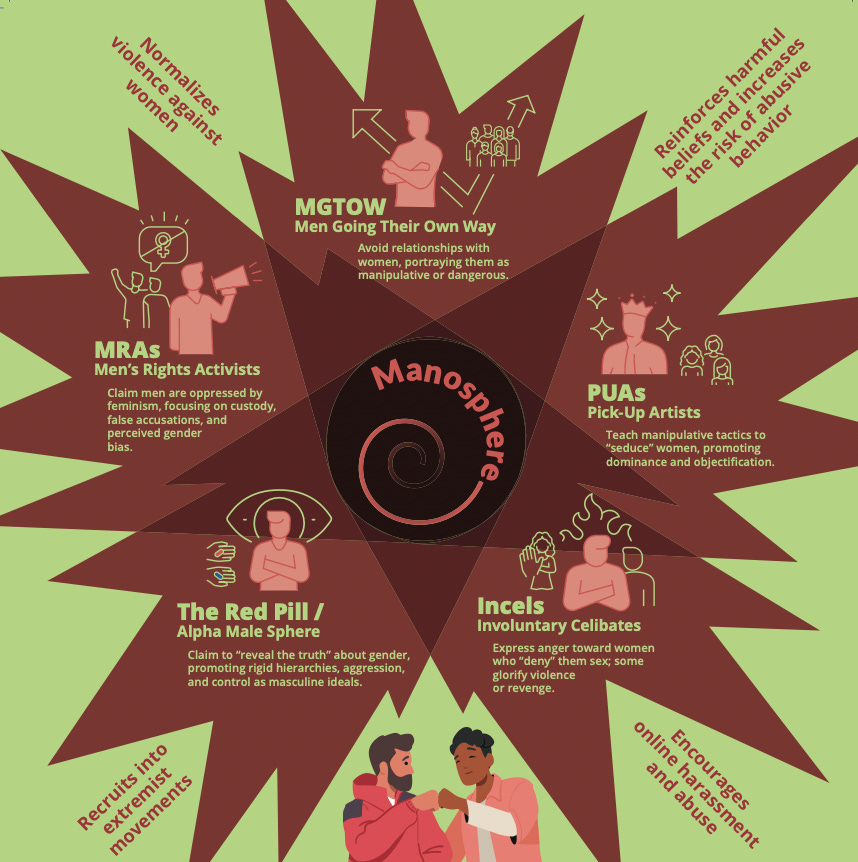
What Sullivan doesn’t realize, and what the documentary doesn’t examine, is that his donut shop logic accidentally raises a question Theroux never quite asks. If the consumer knows the product is harmful and buys it anyway, who holds the moral weight? Sullivan isn’t making a principled argument about informed consent. He’s practicing a distorted, transactional version of it—one in which disclosure substitutes for responsibility, and naming the harm is treated as the same thing as absolution from it.
But the deflection lands on something real. His ethics are transparent in the narrowest possible sense: he hides nothing about what he is selling or why. And that accidental, twisted clarity exposes something the documentary never turns to face: that the institutions now asking him to defend himself operate on the same extraction logic, just with cleaner branding. They routinely mask predatory practice behind a veneer of advocacy, moral authority, or public service. The difference is they never name it. Sullivan, however grotesquely, did.
But look at the room. Theroux is not just a journalist asking a question. He is a representative of a media system—BBC-trained, Netflix-distributed—that also needed this encounter to happen. The documentary exists because Sullivan’s world generates compelling, profitable, algorithmic content. Netflix benefits from the access. Sullivan benefits from the legitimacy and reach that a Theroux documentary confers. Both are in the donut shop. The critical difference is that Sullivan named it.

This is what researchers who study media and power call media-as-node: the recognition that journalism and media production don’t sit outside the systems they cover, observing from neutral ground. They are participants in the same information economy, shaped by the same structural incentives—access, visibility, revenue—that shape their subjects. The newsroom is not the referee. It is another player. And the moment it covers an influencer, a movement, or an ecosystem for outrage clicks or high viewership, it stops challenging that ecosystem and starts fueling the economic engine that sustains it.
This isn’t a critique of Theroux as an individual. He is simply more visible than most. The logic that produced his encounter with Sullivan is the same logic that produced Sullivan in the first place. Recognizing this doesn’t make Sullivan’s behavior more acceptable. It makes the critique more honest and harder to dodge.
Sullivan already understands this.
“If I’d just done good things, I would never have really blown up in the first place,” he tells Theroux.
He is describing, with unusual precision, the structure of the attention economy he inhabits. Not justifying it, but mapping it.
“And I’m not living for other people. I’m living for myself,” he says. “My kids are going to be very, very happy, very fulfilled.”
Theroux names what he’s watching: “You sound a bit like Bonnie Blue.” He means it as an indictment. Sullivan hears it as a category error. The documentary never quite resolves why both of them are right.
If this series is useful to you, subscribe so you don’t miss Part III.

The Reciprocal Radicalization Cycle
What Sullivan represents, and what the documentary fails to systematically address, is not a personal moral failure but the output of a specific structural mechanism.
Call it the Reciprocal Radicalization Cycle: a closed loop in which economic precarity and social isolation produce grievance, grievance gets packaged as identity, identity gets monetized through escalating provocation, and the resulting outrage cycles back through media coverage that amplifies exactly what it claims to be investigating. The cycle is self-reinforcing: each amplification creates conditions for the next escalation; each escalation creates conditions for the next amplification.
The evidence for its effects is specific. UK research published by Ofcom shows that manosphere content now forms part of the regular online environment many young users encounter directly — not sought-out extremism but ambient noise, algorithm-served and normalized. Counter-terrorism data from the same period shows 19 percent of those arrested for terrorism-related offenses in the UK in 2023 were aged 17 and under.
These numbers don’t establish a direct pipeline from any specific content to any specific act. What they describe is an ecology, a set of conditions in which radicalization becomes more available, more legible, and more appealing to people who have already been stripped of other sources of identity, purpose, and belonging.
No single actor in this ecology bears the crime alone. Accountability is distributed. The platforms that amplify, the media that spectacularizes, the institutions that fail to respond, the audiences that click, all participate. Whitney Phillips’ landmark 2018 Data & Society report, The Oxygen of Amplification, documented this precisely: even responsible, critical reporting on extremists can increase their reach, drive recruitment, and inspire imitators. The act of coverage is not neutral. Attention is a resource, and the cycle has learned to harvest it from every direction, including from the journalism meant to interrupt it.
The research on radicalization is consistent across cases: the common thread is not coherent ideology but a recognizable cluster of conditions: narcissistic grievance, social isolation, a prior history of personal failure, personal humiliation, and an information environment that handed each a ready-made identity, enemy, and path to significance. The ideology was the costume. The attention economy was the fuel.
This pattern extends to the manosphere’s own hierarchy. It is not coincidental that its most prominent figures share a recognizable profile: men whose personal circumstances—failed relationships, stalled ambitions, real or perceived humiliations—found rescue in a system that reframed failure as persecution and persecution as identity. The manosphere didn’t radicalize them by exposing them to correct information about a hostile world. It gave lonely, volatile individuals a hero narrative and a cast of villains. The media, by repeatedly centering those figures as fascinating, dangerous, and worthy of prime-time investigation, has done its own work in that same direction.
Here is where the media-as-node argument becomes most consequential: the reciprocal radicalization cycle doesn’t run only through platforms and influencers. It also runs through the coverage. Every time a documentary, a news segment, or a morning show treats the manosphere as a spectacle of outrageous personalities rather than a networked ecosystem with a structural function, it performs exactly the same displacement: making the behavior visible and the machinery invisible, generating attention without generating understanding, amplifying without explaining. Feeding the cycle it claims to be exposing.
The manosphere didn’t create those conditions; it is harvesting them. And the media, in its current form, is assisting the harvest.

The manosphere is not the only mirror the system holds up. Its femisphere counterpart runs the same extraction in reverse: monetizing female grievance through the same algorithmic infrastructure, routing the same legitimate structural conditions toward the same illegitimate conclusions. That ecosystem will get its own full examination in a separate installment. What both prove together is the central argument of this essay: this is not a story about bad men or bad women or bad influencers. It is a story about a system that converts structural failure into identity, identity into provocation, and provocation into revenue; and that runs this cycle regardless of which gender is holding the microphone, which platform is hosting it, or which institution claims to be covering it from neutral ground.
The establishment’s response has been consistent and consistently inadequate: label the creators grifters, platform them for engagement, then perform dismay at the reach. What it has not done is examine its own role in producing the conditions that made both ecosystems legible, or acknowledge that the same institutional failures Sullivan named in the donut shop are the substrate both sides are feeding on. That absence of self-examination is not an oversight. It is the same selective accountability. The establishment is also in the shop. It has simply never had to say so out loud.
Next in the series:
Inside the Manosphere III: Affective Combat and the Paper Tiger—on Piers Morgan’s walk off, what it revealed about the structural fragility of legacy media power, the establishment, and how all roads lead back to Gaza. Subscribe so you don't miss it.

Key Concepts — Part II
Media-as-node: Journalism and media production don’t stand outside the systems they cover. They are participants in the same information economy, shaped by the same structural incentives—access, visibility, revenue—that shape their subjects. The newsroom is not the referee. It is another player. And its silence is not neutrality. It is a decision about whose reality gets to be real.
Reciprocal Radicalization Cycle: A closed loop in which economic precarity produces grievance, grievance is monetized through escalating provocation, and media coverage amplifies what it claims to investigate, creating conditions for the next cycle. Accountability in this cycle is distributed across platforms, institutions, audiences, and the journalism meant to interrupt it. No single actor bears the crime alone. All participate.
Mercenary Transparency vs. Theater of Virtue: Sullivan names his mercenary motive plainly. The institutions surrounding him— the media, NGOs, the counter-terrorism industrial complex, the humanitarian sector— perform virtue while extracting the same value through cleaner branding. The question is not which is worse. It is why one gets a Netflix budget and the other gets a subpoena.
The Safari Is Over is a diagnostic series — an autopsy of the media systems, economic conditions, and institutional failures that produce and sustain exploitative ecosystems like the manosphere, and the broader harms those failures generate well beyond it. It names what is broken, how it got that way, and who pays the invoice.
Killing Spectacle, published in The Field Dispatch, is the companion: a practitioner’s guide to covering online harm and extremism without reproducing its logic. Where The Safari Is Over diagnoses, Killing Spectacle prescribes fifteen shifts across framing, verification, sourcing, and sustained practice for journalists, editors, researchers, and anyone trying to report the system rather than the spectacle.
Both live under Unembedded, structural and media analysis, human rights documentation, and practitioner intelligence for people working the documentation-to-narrative-to-accountability pipeline.