


The political temperature in the United States is at an all-time high.
Within the past 24 hours, President Trump used a primetime White House address to argue that America’s election system “falls catastrophically short” of acceptable standards while releasing newly declassified intelligence about foreign election interference, and going so far as to declare our voting system “worse than any third world country.”
Whether readers agree with his conclusions or not, the speech reflected something undeniable: confidence in democratic institutions has become one of the defining political battles of our time.
Open almost any news app today and you’ll encounter variations of the same story. Headlines warn of foreign influence campaigns, AI-generated disinformation, election security threats, declining institutional trust, and deepening political polarization. After years of relentless crisis coverage, it’s understandable if many Americans feel anxious, exhausted, or increasingly powerless.
Yet there’s a paradox at the center of modern political life. The more attention we devote to national outrage, the less agency we often feel over the things we can actually influence. Refreshing election forecasts won’t alter a single ballot. Doom-scrolling through political commentary won’t make your community safer, your vote more secure, or your neighbors more trusting.
Democratic resilience isn’t built exclusively in Washington. It is built in quieter, less visible places: neighborhoods, polling places, local institutions, and the everyday interactions that shape civic life.
Research on democratic resilience points to a consistent conclusion: societies become more resistant to manipulation when citizens cultivate strong civic habits—verifying information before sharing it, understanding how elections work, knowing their rights, participating in local civic life, supporting trustworthy journalism, and building relationships across political differences.
None of these actions will dominate tomorrow’s headlines. Taken together, however, they are far more consequential than another afternoon spent arguing with strangers online.
Here are six practical ways to strengthen your community—and your own peace of mind—before Election Day.
In this Guide
1. Defuse Online Disinformation: Build better habits for navigating AI-generated content, deepfakes, and misinformation.
2. Secure Your Vote: Reduce uncertainty before Election Day by preparing ahead.
3. Protect the Process: See how poll workers and local election officials keep elections running—and how you can help.
4. Know Your Rights: Understand the legal protections that help you participate in civic life with confidence.
5. Defuse Polarization: Strengthen trust through local relationships and community engagement.
6. Invest in Local Journalism: Support the information ecosystem that keeps communities informed and accountable.
1. Defuse Online Disinformation: Build Your Media Moat
Modern election interference doesn’t begin at the ballot box. It begins on your phone.
Foreign influence operations, domestic political actors, and opportunistic online networks increasingly compete for one scarce resource: your attention. Their objective isn’t always to persuade you to support one candidate over another. Often, it’s simply to erode trust, heighten emotional reactions, and deepen social division.
Artificial intelligence has accelerated this challenge. Convincing deepfake videos, cloned voices, fabricated images, emotionally charged misinformation and hyper-partisan rage bait can now spread faster than professional fact-checkers can respond. As these technologies become more accessible, every voter must develop basic habits for evaluating information before reacting to it.
We just saw this playbook in action in the United States, where a highly sophisticated cyber campaign was exposed for creating deepfake video clones of legitimate anchors from Reuters and Fox News to distribute fabricated election news.
Recent elections around the world illustrate how quickly synthetic media has become part of modern political campaigns:
Israel: Fabricating institutional authority
Deepfake videos falsely portrayed Supreme Court Justice Noam Sohlberg—who chaired the Central Elections Committee—announcing a fabricated state of emergency that would supposedly close polling stations. At the same time, misleading AI-generated images circulated through encrypted messaging apps such as WhatsApp and Telegram, exploiting private networks where independent fact-checking is more difficult.
Slovakia: Exploiting the information vacuum
Just two days before parliamentary elections, an AI-generated audio recording appeared to capture a leading candidate discussing election fraud. Because Slovak law imposed a pre-election media silence period, the candidate had little opportunity to publicly rebut the recording before voters went to the polls.
United Kingdom: Targeting public trust
Ahead of national elections, concerns over AI-generated audio prompted the UK Electoral Commission to test new deepfake detection tools. Synthetic recordings capable of imitating public figures highlighted how quickly fabricated media could damage reputations before its authenticity could be verified.
India: AI at unprecedented scale
India’s 2024 general election demonstrated the sheer scale of AI-assisted political communication. Campaigns generated millions of automated voice messages in regional dialects and, in some cases, used generative AI to recreate deceased political leaders delivering messages that appeared to endorse contemporary candidates—further blurring the distinction between historical record and synthetic content.
Different countries. Different political systems. The underlying tactic is remarkably similar: exploit emotion before facts have time to catch up.
What You Can Do
Verify before you amplify. Never share or react to an inflammatory political headline based on a single post or feed. Deploy the 3-Source rule (lateral reading). Leave the original platform entirely, open three separate browser tabs, and verify the claim across three distinct, independent news organizations with separate ownership and editorial boards. If only one outlet is reporting the story, or if the claim exists only on social media, treat it with caution until additional reporting emerges.
Reverse-search suspicious images. Images often circulate without context or are recycled from unrelated events. Free tools such as Google Lens or TinEye Reverse Image Search can help identify when and where an image first appeared online, making it easier to detect manipulated or misleading visual content.
Listen critically. AI-generated audio has become increasingly convincing, but synthetic recordings can still contain subtle clues, including unnatural pacing, unusual vocal cadence, inconsistent background sound, sudden drops in background ambient noise, or a complete lack of emotional inflection. When controversial recordings surface, wait for verification before accepting them as authentic. You can also test suspicious files using free detection platforms like ElevenLabs AI Speech Classifier.
Interrupt the outrage cycle. Disinformation succeeds by provoking immediate emotional reactions, to force viral sharing. If a post makes you instantly angry, frightened, or triumphant, pause before responding. Force a mandatory 20-minute cooling-off period before you reply, share, or quote-post it. Even a brief delay gives time for additional reporting and reduces the likelihood of unintentionally amplifying false information.
Curate your information environment. Social media platforms allow users to mute or block keywords, topics, and accounts in your account settings. Consider reducing exposure to speculative polling terms, inflammatory commentary, highly polarized phrases, and repetitive partisan content during the days or weeks surrounding an election. Limiting algorithmically amplified outrage can improve both the quality of your information and your own mental well-being.
Protect your digital privacy. When sharing links received through messaging apps or social media, consider removing unnecessary tracking parameters. Delete everything in the URL starting with
?utm_or?src=before forwarding them. These tracking codes are used by algorithmic data firms to map your social circles and build targeted profiles to feed you more polarized content.
Why this Matters
The strongest defense against disinformation isn’t better technology. It’s better habits. No platform, government agency, or AI detection system can verify every piece of content before it reaches your screen. But each of us can slow the spread of misinformation by refusing to become its next distributor. In an era when synthetic media is becoming cheaper, faster, and more convincing, skepticism is no longer cynicism. It’s civic responsibility.
2. Secure Your Vote: Reduce Uncertainty Before Election Day
For many Americans, anxiety about elections has less to do with politics than with uncertainty. Am I still registered? Has my polling location changed? Will my mail ballot arrive on time? What happens if my name isn’t on the voter rolls?
These aren’t hypothetical concerns. In recent election cycles, administrative issues—including polling-place consolidations, malfunctioning electronic pollbooks, long lines, and routine voter-roll maintenance—have disrupted voting in communities across the country, leading to voter suppression or citizen alienation. While most problems are resolved through established election procedures, many voters don’t discover an issue until they arrive at the polls.
The easiest way to reduce election-day stress is to eliminate as many unknowns as possible before voting begins.
What You Can Do
Verify your registration now. Don’t assume your registration is current simply because you’ve voted before. States regularly update voter rolls, and polling locations can change between elections. Visit Vote.gov or your state’s official election website to confirm your registration status, identify your assigned polling place, and review a sample ballot before Election Day.
Knowing what to expect removes unnecessary uncertainty, and helps you spend more time evaluating candidates instead of navigating logistics.
Save proof of your registration. After confirming your registration, save a screenshot showing your active status and polling location or print a copy for your records. If questions arise at your polling place, having that information immediately available can help election officials resolve administrative issues more efficiently.
Track your ballot in real-time. If you’re voting by mail, use your state’s official ballot-tracking system whenever one is available. Many states participate in services such as BallotTrax, allowing voters to receive text or email notifications when ballots are mailed, received, and accepted for counting. Tracking your ballot replaces uncertainty with confirmation.
Vote during quieter hours if possible. Long lines tend to occur before work, during lunch breaks, and immediately after offices close. When schedules allow, mid-morning or mid-afternoon voting often results in shorter wait times, fewer administrative bottlenecks, and mitigate risk of encountering malfunctioning machines during peak pressure hours. While every community differs, flexibility can make voting faster and less stressful.
If you’re an American living abroad, plan early. More than four million Americans are eligible to vote from overseas, yet many ballots are rejected each election because they arrive late or contain technical errors. Submit a Federal Post Card Application (FPCA) every year through the Federal Voting Assistance Program (FVAP) to request your ballot. Whenever your state permits it, choose electronic ballot delivery to reduce international mail delays. If your official ballot doesn’t arrive in time, many voters can use the Federal Write-In Absentee Ballot (FWAB) as an emergency backup, to ensure your vote is counted.
Use your nearest U.S. embassy or consulate. In many countries, U.S. embassies and consulates allow citizens to submit completed absentee ballots for diplomatic mail forwarding to the United States. Check your embassy’s website well before election deadlines to confirm local procedures and mailing cut-off dates.
Follow ballot instructions carefully. Many absentee ballots are rejected for avoidable mistakes: missing signatures, incorrect envelope procedures, or incomplete forms. Take a few extra minutes to read every instruction before sealing your ballot. Sometimes the smallest administrative details determine whether a vote is ultimately counted.
Confidence in elections doesn’t come from assuming everything will work perfectly. It comes from understanding how the system works, and preparing for the few things that occasionally don’t. Most election administration happens quietly, professionally, and without incident. But when problems do arise, informed voters are far better equipped to navigate them than surprised ones. Protecting your vote begins long before Election Day.
3. Protect the Process: Serve Your Community as a Poll Worker
America’s elections are remarkably decentralized. Unlike many democracies, elections in the United States are administered primarily at the county and municipal level by thousands of local election officials and hundreds of thousands of ordinary citizens serving as poll workers, election judges, and volunteers. That decentralization is one of the system’s greatest strengths. It distributes responsibility rather than concentrating it in one institution. But it also depends on people showing up.
Across the country, election offices have struggled in recent years to recruit enough poll workers, particularly since the pandemic. Staffing shortages can contribute to longer lines, delayed openings, administrative bottlenecks, and increased pressure on already stretched election officials. While these challenges vary widely by jurisdiction, they underscore a simple reality: elections rely on civic participation long before anyone casts a ballot.
Most Americans experience elections only as voters. Few ever see how much preparation, training, and bipartisan cooperation happens behind the scenes to make Election Day work.
Serving as a poll worker offers a rare opportunity to see that process firsthand—and to help strengthen it.
What You Can Do
Apply through your local election office. If you’ve ever wondered how elections actually operate, consider serving as a poll worker. Begin with your county or state election office, which can explain eligibility requirements, training, compensation, and responsibilities. Most positions are paid, include mandatory training, and require no previous experience. Organizations such as the U.S. Election Assistance Commission and WorkElections.org can also help connect volunteers with local opportunities.
Bring someone with you. Double your impact by convincing a friend, colleague, or family member to sign up with you. Election officials consistently report needing younger workers with strong technical skills to help operate modern electronic check-in pollbooks. Serving together not only helps your community, it also makes what can be a long Election Day more enjoyable.
Learn how elections actually work. Even if you never become a poll worker, take time to understand your state’s election procedures. Read your local election office’s voter guides. Watch demonstrations of ballot-counting procedures. Learn how provisional ballots work. Understand the safeguards that already exist. The more familiar citizens become with election administration, the less room there is for speculation, misinformation, and unnecessary distrust.
Thank the people who make elections possible. Poll workers, election clerks, and local election administrators rarely receive public recognition. Their work is demanding, highly scrutinized, and increasingly conducted under intense public pressure. A simple expression of appreciation helps reinforce that election administration is public service, not partisan activism.
Democracy doesn’t function automatically. Every election depends on thousands of ordinary citizens who quietly keep the process running—from election administrators and poll workers to volunteers and observers. Most of their work happens out of public view, and that’s precisely the point: when elections function well, they rarely make headlines.
Strengthening democracy isn’t only about casting a ballot. Sometimes it’s about helping make sure everyone else can cast theirs, too.

4. Know Your Rights Before You Need Them
Democracy depends on more than the right to vote. It also depends on citizens understanding the rights that allow them to participate in public life with confidence.
Whether you’re attending a town hall, observing a polling place, participating in a peaceful demonstration, or documenting events in a public space, uncertainty about your legal rights can discourage civic participation just as effectively as misinformation.
In recent years, concerns about surveillance, aggressive monitoring, and the increasingly blurred boundaries between lawful political expression and security enforcement have left many Americans uncertain about where those rights begin and end. That uncertainty can be just as chilling as overt intimidation, causing people to withdraw from civic life altogether.
The goal isn’t to become a legal expert. It’s simply to understand your rights well enough to participate confidently, respond calmly, and know where to turn if questions or problems arise.
What You Can Do
Carry a trusted legal resource. Keep an instant legal reference on your phone. Download a reputable “Know Your Rights” guide or bookmark resources from organizations such as the ACLU or your state’s civil liberties organization (e.g. ACLU “Know Your Rights” App). Bookmark legal portals regarding your explicit rights when filming law enforcement, participating in peaceful protests, or encountering aggressive behavior at public demonstrations.
Document incidents carefully and systematically . If you witness voter intimidation, unlawful interference, or another concerning incident, resist the urge to post immediately on social media. Instead, open a secure note app and record the precise time, GPS location, people involved (when appropriate), and a factual description of what occurred (individual descriptions, including officer badge numbers, and specific actions). Detailed contemporaneous notes are often more valuable to investigators than fragmented online posts.
Secure your phone. If you expect to attend a demonstration or another event where your phone may contain sensitive information, review your device’s security settings in advance and change your phone settings to require a passcode instead of FaceID/Biometrics. Under U.S. law, law enforcement can legally force you to unlock a phone with your face or fingerprint, but they cannot legally force you to give up a memorized passcode without a warrant. Using a strong passcode, enabling encryption, and understanding your legal rights regarding access to your device can better protect your personal information. Because legal standards surrounding digital privacy continue to evolve, consult current guidance from trusted legal organizations for the latest information.
Report problems through official channels. If you experience or witness voter intimidation, unlawful interference, or significant election irregularities, notify local election officials immediately. You can also contact the nonpartisan Election Protection Hotline (866-OUR-VOTE), which connects voters with trained volunteers who can explain available options and, when appropriate, escalate concerns to election authorities.
Understand the rules at your polling place. Election laws differ from state to state, including rules governing campaign activity near polling locations. Before Election Day, familiarize yourself with your state’s electioneering restrictions so you know what conduct is, and is not, permitted around polling places. Knowing the rules helps protect both your own rights and the integrity of the voting process.
Memorize the buffer zone rule. Every state has a legally mandated "no-electioneering" boundary (typically 50 to 100 feet) around the entrance of a polling place. Inside this perimeter, no one is allowed to hand out political literature, wear candidate merchandise, or solicit votes. If a partisan actor approaches you inside this zone, say clearly: "This is a designated buffer zone, and electioneering is restricted here," and report them to the chief poll worker immediately.
If your eligibility is questioned, ask about your options. If there is a problem locating your registration at the polls, remain calm and ask election officials to explain the available procedures. Under federal law, and Help America Vote Act (HAVA), eligible voters may have the right to cast a provisional ballot in certain circumstances while their eligibility is verified. Understanding that option before Election Day can help reduce confusion if an administrative issue arises.
Democratic participation is strongest when citizens understand both their rights and their responsibilities. Knowing the law isn’t about preparing for conflict. It’s about replacing uncertainty with confidence. Most civic interactions proceed without incident. But when unexpected situations do arise, preparation allows you to respond thoughtfully rather than react emotionally. Confidence, like resilience, is built long before it’s tested.

5. Defuse Polarization: Rebuild Trust Close to Home
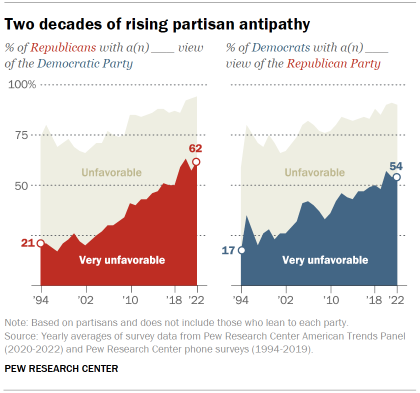
Political polarization often feels like an unavoidable feature of modern life. National debates spill into family gatherings, friendships fracture over social media, and every election can feel like an existential struggle between irreconcilable sides.
Yet research consistently points to an important distinction: while Americans remain deeply divided over national politics, they tend to view their own neighbors far more positively. Face-to-face interactions reduce the stereotypes and assumptions that flourish online, reminding us that most people are more complex than the political labels attached to them.
Democratic resilience begins not in Washington, but in the communities where people still have the opportunity to know one another as neighbors rather than adversaries.
What You Can Do
Create spaces where politics isn’t the agenda. Invite neighbors over for coffee, organize a block gathering, or spend time together at a local park—with one simple expectation: leave national politics at the door. Shared experiences build trust far more effectively than political debates ever will. Focus entirely on shared local needs—neighborhood safety, fixing local potholes, or planning a block party—to build a network of mutual support that lasts long past November.
Acknowledge emotions, then change the conversation. When someone raises a divisive political topic, resist the instinct to argue or fact-check immediately. Instead, acknowledge the emotion behind what they’re saying before gently redirecting the conversation toward something you both share. For example: “I can understand why that story is worrying. The news has been exhausting lately. I’ve been trying to focus more on what’s happening here in our neighborhood. Have you seen they’re finally repairing the intersection on Maple Street?” Validation isn’t agreement. It’s often the quickest path back to a productive conversation.
Choose curiosity over persuasion. If a political disagreement does emerge, don’t focus on winning the argument. Ask thoughtful, open-ended questions instead. “I’m curious, what experiences shaped your view on that?” Questions encourage reflection. Arguments often encourage people to defend positions they may not have examined deeply. This disrupts defensive, algorithmic thinking.
Show up locally. Attend a town council meeting, community board session, school board meeting, or neighborhood association gathering. Local government is where many decisions affecting daily life are actually made, yet it often receives only a fraction of the attention devoted to national politics. Participation also reminds us that civic life is far broader than elections alone.
Join a nonpartisan civic organization. Organizations such as the League of Women Voters, neighborhood associations, volunteer groups, and community improvement organizations provide opportunities to work alongside people with different political perspectives toward shared local goals. Collaboration builds trust in ways online debate rarely can.
Trust is rarely rebuilt through national political victories. It grows gradually through repeated local interactions: helping a neighbor shovel snow, volunteering together, attending community meetings, or simply learning one another’s names.
Politics may shape our differences. Community reminds us of what we still share.
6. Invest in Local Journalism: Strengthen Your Information Ecosystem
Democracy depends on more than free elections. It depends on reliable information.
Yet today’s media environment increasingly rewards attention over accuracy. National cable networks, social media platforms, and algorithm-driven news feeds compete for clicks, engagement, and advertising revenue—often elevating the stories most likely to provoke outrage rather than understanding.
Local journalism operates under a different set of incentives. Reporters covering city councils, school boards, county courts, and neighborhood issues are often accountable to the very communities they serve. Their work is less focused on amplifying national political conflict and more concerned with answering practical questions that directly affect people’s lives.
As local newsrooms disappear across the United States, communities lose more than newspapers. They lose institutional memory, public accountability, and trusted sources of shared information. Supporting local journalism is one of the most direct investments citizens can make in democratic resilience.
What You Can Do
Subscribe to a local substack or independent newspaper. If you’re able, support an independent local newspaper, nonprofit newsroom, or community journalist covering your city or region. Even one paid subscription helps sustain reporting that keeps residents informed about the decisions shaping their daily lives. Organizations such as the Institute for Nonprofit News (INN) or the Local News Initiative can help readers discover nonprofit newsrooms serving their communities.
Diversify your news diet. Avoid relying on a single publication, television network, or social media feed. Reading across multiple credible news organizations with different editorial approaches provides a broader understanding of events and makes it easier to recognize bias, omissions, or incomplete reporting. Healthy information ecosystems depend on diversity, not uniformity.
Reduce algorithmic noise. Consider muting highly repetitive political commentary, prediction markets, and outrage-driven content during election season. This isn’t about avoiding the news. It’s about creating space for reporting that informs rather than inflames.
Read beyond the headline. Headlines are designed to capture attention. Whenever possible, read the full article before sharing it. Examine the reporting, the evidence presented, and the sources quoted—not just the headline or accompanying social media caption. Thoughtful readers are far more difficult to manipulate than impulsive ones.
Support journalism that values accuracy over speed. Reliable reporting often takes time. Investigative journalism, local accountability reporting, and deeply sourced analysis rarely compete with breaking news for speed—but they frequently provide the context that breaking news cannot. Supporting that work helps strengthen the public’s ability to make informed decisions.
A healthy democracy depends on citizens who are well informed, not simply well connected. The information we choose to support shapes the conversations we have, the institutions we trust, and ultimately the decisions we make together.
In an era of information abundance, one of the most meaningful civic choices we can make is deciding what kind of journalism deserves our attention, our trust, and our support.


Democracy Is Built Closer to Home Than We Think
It is easy to believe that democracy is shaped only by presidents, political parties, and institutions in Washington. The headlines encourage that perception. Every day brings another crisis, another prediction, another argument over the future of the country. The result is a growing sense that the most important decisions are happening somewhere else, and that ordinary citizens have little influence over them.
History suggests otherwise. Democracies are sustained not only by constitutions and courts, but by the everyday habits of ordinary people: verifying information before sharing it, showing up to vote, serving their communities, understanding their rights, engaging respectfully with their neighbors, and supporting journalism that holds local institutions accountable.
These actions rarely dominate the news cycle. They won’t trend on social media. They won’t eliminate political disagreement or resolve every institutional challenge facing the country.
But they do something quieter, and ultimately more durable. They strengthen the civic foundations on which democracy depends. If there is one lesson from recent elections around the world, it is this: resilience cannot be downloaded, legislated, or outsourced. It must be practiced. Not all at once.
One conversation. One verified story. One ballot. One community. At a time.
So rather than asking what Washington will do next, ask a different question:
What is one thing I can do this week to make my own community a little more informed, a little more connected, and a little more resilient?
Start there. Because democracy is built closer to home than we often imagine.
Your Turn: Take One Action Today
Pick just one action from this playbook today, and take your power back from the algorithms.
Share this guide with three friends who are feeling overwhelmed by the news cycle, and let’s build resilience together.

About the Author
Raja Althaibani works at the intersection of media, harm, technology, and accountability—advising, training, investigating, and building infrastructure for practitioners navigating an information landscape that moves faster than most frameworks can follow. Her background spans human rights, journalism, international law, and open-source digital documentation.
She writes Unembedded—long-form analysis, reported essays, and field frameworks on media, power, harm, and who controls the story. It includes two ongoing series: The Safari Is Over, on how media covers harm and what better practice looks like, and The Field Dispatch, the intelligence arm of The Field—a community of practice she founded.
Work with Raja: inquiries@rajaalthaibani.com · contact form · www.rajaalthaibani.com · Linkedin
Well said. Thanks.